
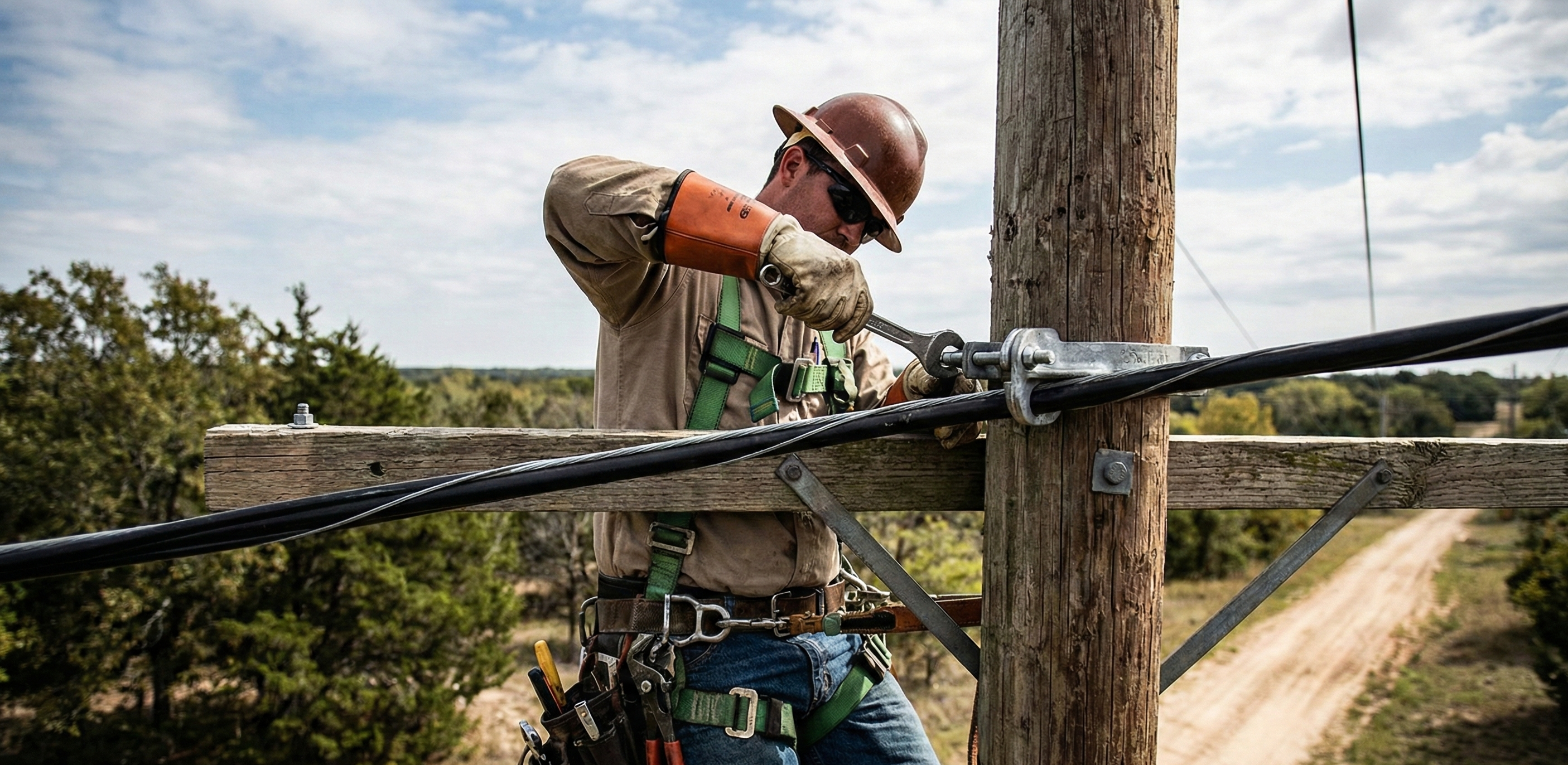
Anchoring clamps are not complicated, but their installation is where long-term system integrity lives or dies. The physics are simple: these components must manage 100% of the calculated dead-end tension—ice loads, wind shear, conductor sag correction. Failure is catastrophic. Rework is expensive.
The margin for error is nonexistent. Get this right the first time.
Preparation: The 90% Solution
Ninety percent of installation failures trace back to inadequate preparation or selecting the wrong hardware for the specific line geometry.
Selecting the Right Anchoring Clamps
You cannot use a universal clamp for every application. System requirements dictate hardware choice.
- ADSS/Fiber Optic: Requires clamps with specific jaw designs that grip the outer jacket without crushing delicate internal fiber bundles.
- Figure 8 (Self-Supporting Messenger): The clamp grips the separate steel messenger wire. Ensure the clamp matches the diameter and material of the messenger.
- Low Voltage ABC: These clamps are typically self-adjusting wedge types. Crucial Point: Engineered for specific cross-sections (e.g., 2x35mm² vs. 4x95mm²). Mismatching is instant failure.
Essential Tool Checklist
You need precision. Torque wrenches are not optional.
- Safety Gear: Always primary concern.
- Come-Alongs or Cable Pullers: Rated correctly for line tension.
- Dynamometer or Tensiometer: For confirming tension before termination.
- Torque Wrench (Calibrated): Required for securing structural bolts.
- Measuring Tape and Marking Tools
Safety Protocol
Load Management: Never terminate a line under tension using hands-on methods. Use mechanical advantage (come-alongs, grips) to pull the cable to the calculated slack before inserting the anchoring clamp. This prevents snap-back and uneven seating.
Step-by-Step Installation Procedure: Core Mechanics
Step 1: Prepare the Cable End
Cleanliness is next to long life. Dirt compromises grip.
- Cleaning: Wipe down the conductor or messenger wire. Use appropriate solvents if necessary.
- Cable Measurement: Measure the required lay length per the schematic. Mark the termination point clearly.
- Sheath Preparation: For Figure 8 cables, separate the messenger from the optic cable using the specified tool.
Step 2: Assemble the Clamp and Anchor Bracket
Mount the bracket before the cable is terminated.
- Secure the dead-end bracket to the structure using specified structural bolts.
- Torque it exactly: If the specification calls for 70 ft-lbs, deliver 70 ft-lbs.
- Attach the clamp body ensuring orientation allows the cable to enter directly in line with the tension vector.
Step 3: Positioning the Wedge and Seating the Cable
This is the failure point for 70% of poor installations. The wedge must seat symmetrically.
- Initial Insertion: Insert the conductor through the open clamp body.
- The Wedge Placement: Place the grip wedge back into the clamp body. Ensure the wedge is installed in the correct direction (check orientation markers).
- Applying Initial Tension: Using the come-along, pull the conductor until the line reaches its initial installation tension. This must be sufficient to draw the wedge into the clamp body.
Step 4: Final Tensioning and Release
- Slowly release the tension from the mechanical puller. As tension transfers, the wedge will fully seat.
- Listen for any movement or slippage. A successful transfer is quiet and stable.
- Trim excess cable length, leaving the necessary service loop.
Common Mistakes and Longevity Tactics
Longevity Tactic: Anti-Rotation
On severe angle structures (where line angle exceeds 30 degrees), rotational stress can shear anchor bolts. Always use locking hardware (split washers, nylock nuts) and consider Anti-Rotation Brackets (ARBs) to distribute force across the structure.
Over-Tensioning Kills
The single most common installation error is applying too much initial tension. Anchoring clamps are designed to hold tension, not create it. If the conductor tension exceeds the elastic limit during termination, the line will sag prematurely. Use a tensiometer.
Managing Vibration and Fatigue
On spans exceeding 600 feet, high-frequency vibration (Aeolian vibration) causes metal fatigue. Install vibration dampers (e.g., Stockbridge dampers) 2 to 5 feet from the clamp body. This is cheap insurance against expensive fatigue breaks.
Conclusion
Do not accept "good enough." Every minute spent on proper installation procedures saves days of troubleshooting and tens of thousands in emergency repair work. Reliability is the ultimate metric. Install for perpetuity. Check your torque. Finish the job.