
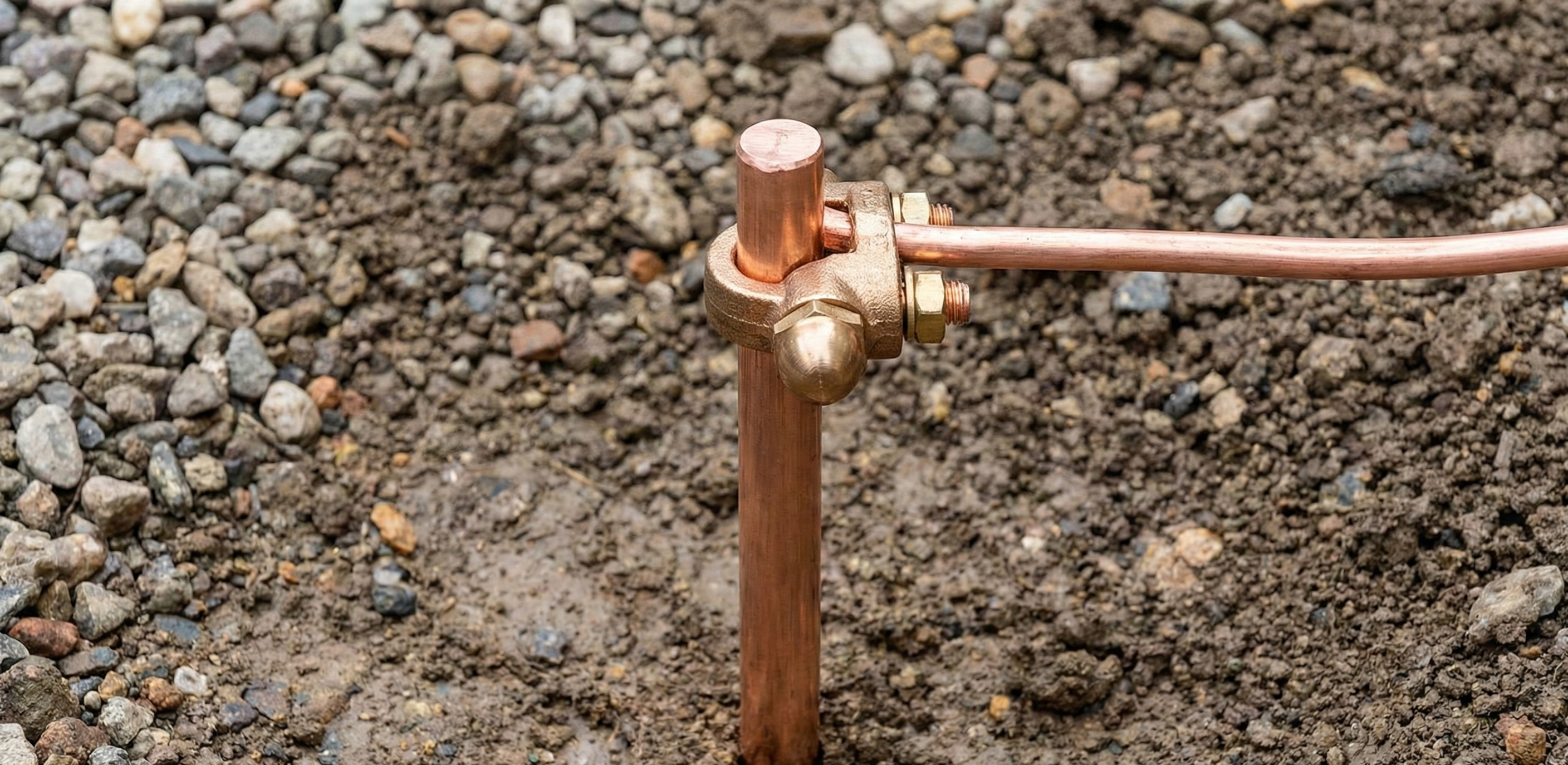
A properly installed earthing rod (or grounding electrode) is the literal lifeline for your electrical system, channeling fault currents and lightning strikes safely into the earth. If you are handling this installation, understand this: competence is mandatory. Sloppy work creates fire hazards and risks electrocution.
We skip the theory and get straight to execution, compliance, and common failure points.
Essential Preparation: Site, Specs, and Safety
Before the hammer swings, you need a precise plan. Poor preparation causes most system failures.
Rule Zero: Call Before You Dig
Do not touch the ground until you have verified subsurface utility lines. Call 811 (or your regional equivalent) immediately. Utility strikes kill. They also stop the entire job cold. Wait the required time. Get the all-clear. This step is non-negotiable.
Materials Checklist (The Right Tools for the Job)
You need certified components. Do not cheap out on the electrode itself; a failed rod is worse than no rod at all because it provides a false sense of security.
- The Rod: Typically 5/8-inch or 3/4-inch diameter, copper-clad steel, minimum 8 feet (2.4m) long, per NEC 250.52(A)(5).
- The Clamp: A bronze or copper listed grounding electrode connector (often called an "acorn clamp").
- Conductor: Appropriately sized copper wire (NEC often dictates #6 AWG minimum).
- Driving Tool: A rotary hammer with a dedicated driving bit is superior. A sledgehammer works, but it causes mushrooming on the rod tip.
- Bonding Jumper: For connecting multiple rods if necessary.
The Installation Process: Driving and Connecting
We are aiming for low impedance and permanent mechanical integrity. Follow the sequence exactly.
Step 1: Locating the Ground Point
The rod must be installed in a location accessible for inspection but protected from physical damage. Drive the earthing rod at least two feet away from the exterior of the structure.
Step 2: Driving the Rod
The goal is full depth. Eight feet down.
- Start Straight: Position the rod perfectly vertical. Starting crooked guarantees problems as the rod deepens.
- Use Power Equipment: If using a rotary hammer, fit the driving bit. Apply steady pressure. Drive the rod until only six inches of the rod remain above grade.
- Manual Driving Warning: If using a sledgehammer, place a temporary driving cap over the rod tip. This prevents "mushrooming" the top, which renders the rod unusable for the connection clamp.
- Full Penetration: The NEC requires the full 8-foot length to be in contact with the earth.
Step 3: Making the Connection
This is where many new installers fail. The connection must be secure, accessible, and rated for underground contact if buried.
- Clean the Surface: Clean the exposed section of the earthing rod with an abrasive pad. Remove all oxidation.
- Attach the Clamp: Slide the acorn clamp onto the rod.
- Insert the Conductor: Feed the required gauge copper grounding electrode conductor into the clamp.
- Tighten Securely: Torque the bolts on the clamp. This connection must be wrench-tight, ensuring metal-to-metal contact.
Dealing with Difficult Terrain
What happens when 8 feet isn't possible? Rock shelves are common. Stopping short is not an option.
Option 1: Horizontal Trenching
If bedrock prevents vertical driving, the rod or conductor must be placed in a trench at least 30 inches deep, following the ground contours. The total length in contact with the earth must still be 8 feet or more.
Option 2: Supplementary Rods
- Spacing: Install a second earthing rod a minimum of 6 feet away from the first.
- Bonding: Connect the two rods with a bonding jumper to create a unified grounding system.
Compliance and Verification
Your work isn't done until the system is verified. Trust but verify.
Use a Fall-of-Potential Tester
Use a "Megger" to measure the resistance. If your system exceeds the 25-ohm threshold (NEC 250.56), you typically need to install supplementary rods.
Final Inspection
Ensure all connections are protected from moisture and physical damage. Proper grounding is the foundation of electrical safety. Install it once, install it right.